
This post may contain affiliate links, including those from Amazon Associates. If you make a purchase through these links, I may earn a commission at no additional cost to you. Learn more about our affiliate policy.
For years, I tried to “slow down” by adding more to my plate. I’d fill my mornings with elaborate rituals, then feel frustrated when I couldn’t keep them up.
It took time to understand that slow living isn’t about doing more peaceful things, it’s about creating a rhythm that feels sustainable and true.
If you’ve ever tried to build a slow-living routine only to abandon it after a week, you’re not alone. The problem isn’t lack of discipline. It’s that many routines are built on ideals rather than real life.
The key is simplicity, designing something small enough that you’ll actually return to it in your own way.
What Slow Living Really Means
Slow living is often mistaken for idleness or minimalism. It’s not about doing less for the sake of it, it’s about doing with intention. It’s choosing what truly matters over what merely fills space.
In a world that rewards speed and constant production, slowing down can feel like swimming upstream.
But slow living doesn’t require escaping the world. It means engaging with it differently and focusing on depth instead of pace. When you choose to slow down, you create moments of awareness that feed your energy instead of draining it.
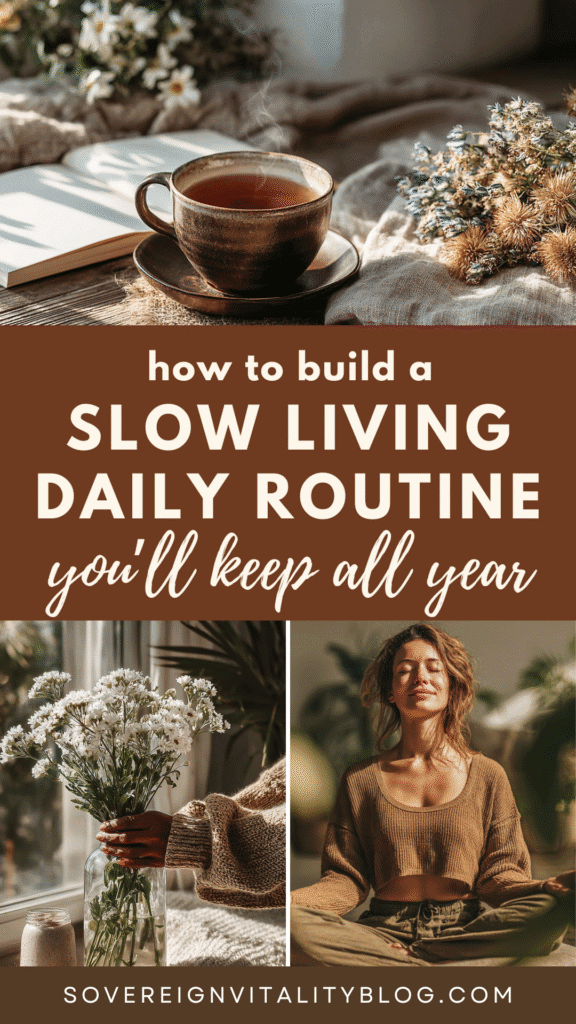
You might picture slow living as cozy sweaters and herbal tea, but it’s more than an aesthetic.It’s the experience of being fully present where you are.
Whether you live in an apartment or a farmhouse, slow living begins when you align your routine with your own natural rhythm instead of external pressure.
Why a Routine Matters for Slow Living
Without structure, slow living can easily become wishful thinking. A routine gives shape to your days so you can live intentionally rather than reactively. It acts as an anchor for your nervous system; a predictable rhythm that communicates safety and steadiness.
When every day feels unpredictable, the mind stays on alert. You end up chasing tasks, scrolling to self-soothe, and wondering why peace feels out of reach.
But when you know what comes next, even in small ways, your body relaxes. Energy stops leaking into decision fatigue, and you start moving through your days with more calm awareness.
A slow-living routine isn’t about scheduling every moment. It’s about creating a framework that keeps you aligned. Within that framework, you have flexibility and flow. You can breathe and adapt, but you’re not floating aimlessly through the day.
To explore how your physical space can support this sense of calm, read how to create a nervous system sanctuary at home, which shares simple ways to make your environment feel soothing and grounded.
Start Small, Stay Consistent

Most people overcomplicate routines because they want to feel immediate transformation. But slow living asks the opposite, start smaller than you think you should. Choose one or two things that truly feel nourishing, not aspirational.
You might begin with a short morning pause, a cup of tea without your phone, or a few minutes of fresh air before diving into work. When you choose something small and repeatable, it becomes a natural part of your rhythm.
Trying to overhaul your entire lifestyle at once is a recipe for burnout.
Consistency builds momentum. When you show up for one small thing each day, it rewires your nervous system toward presence. You start to crave the feeling of groundedness that comes from following your own rhythm. From there, your slow-living routine will grow naturally.
Create a Morning Anchor

Morning is where your entire day takes shape. How you begin sets the tone for how you’ll move through everything else. The only goal is to start the day in alignment.
Pick one action that helps you wake up calmly and intentionally. That might be:
- Opening your curtains and letting light in.
- Drinking a glass of water and stretching for two minutes.
- Sitting with your coffee and noticing your breath before checking your phone.
What matters is that it feels real and grounding, not performative. A short, consistent anchor done daily is more powerful than a long routine done occasionally. Let it feel approachable enough that you look forward to it.
Over time, that small ritual becomes muscle memory. You wake up knowing exactly how to ease into your day without rushing. The energy you save from not scrambling becomes the foundation for everything else.
If you want inspiration for what those first calm minutes of the day can look like, explore how to create a slow living morning routine with hygge practices for simple ideas that infuse warmth and mindfulness into your mornings.
Redesign How You Move Through Tasks
Slow living is not about doing nothing, it’s about doing one thing at a time. We’ve been conditioned to believe that multitasking equals productivity, but it often leads to scattered energy and shallow focus.
Try the practice of monotasking. When you cook, cook. When you write, write. When you rest, rest.
Even five minutes of full attention changes your state. Between tasks, pause for a breath or a sip of water before moving to the next thing. These tiny transitions reorient your nervous system and keep your energy steady.
A few small adjustments help shift into slower patterns:
- Keep your to-do list realistic—three to five main tasks per day.
- Schedule space between activities so you’re not always rushing.
- Resist the urge to fill downtime with scrolling or noise.
You’ll notice that even with fewer tasks, you feel more accomplished. That’s because you’re moving from depth instead of speed.
Build Nourishment Into Your Days

Sustainability in slow living comes from taking care of your energy, not draining it. This means designing rhythms that include nourishment for both body and mind.
Start by creating rituals around food and movement that feel doable. You don’t need elaborate meal prep or an intense workout plan. You just need consistency.
- Eat at roughly the same times each day to support your circadian rhythm.
- Prepare simple, whole-food meals that ground your energy rather than spike it.
- Move your body in ways that feel enjoyable like walking, stretching, dancing, or yoga.
When you treat these practices as daily rhythms rather than “self-care moments,” they become part of your lifestyle. The goal isn’t to perfect your habits; it’s to let them support you naturally.
If you’d like some easy structure for your meals, explore clean eating meal plans for beginners made simple for inspiration on nourishing recipes that fit easily into a slower, more grounded lifestyle.
Create an Evening Wind-Down
The evening is where you integrate everything that happened during the day. A slow-living routine always includes a way to close the loop—to release tension and prepare for rest.
Choose a few small actions that signal to your body that the day is complete. This could be dimming the lights, drinking herbal tea, writing down thoughts from the day, or taking a short evening walk. Lowering stimulation before bed helps your nervous system reset.
It’s easy to scroll or work late into the night, convincing yourself you’re relaxing, but this keeps the mind overstimulated.
Replacing screen time with slower rituals might feel awkward at first, but within a week, your body begins to crave that calm closure. You’ll notice deeper sleep and a clearer mind in the morning.
You can also explore five natural evening calming techniques for better sleep if you want practical ways to relax your nervous system before bed.
Reflect and Adjust Weekly
Even the most mindful routines can become rigid if we never reassess them. Each week, take a few minutes to notice what’s working and what isn’t.
Ask yourself:
- Which parts of my routine bring me peace?
- Which parts feel forced or unrealistic?
- How can I simplify this week without losing my sense of rhythm?
Your routine should serve your life, not control it. Seasons change, energy levels fluctuate, and your needs evolve. When you approach your routine with flexibility, it becomes something you can keep long term.
If you’re ready to expand beyond daily rhythms, these easy swaps to begin a slow living lifestyle offer practical ways to weave the philosophy of simplicity into every area of your life.
Living Your Routine as a Practice

A slow-living routine will keep unfolding as you grow. Some weeks, it may feel natural. Other times, you’ll lose your rhythm and have to return to it. That’s part of the process.
The true measure of success isn’t how perfectly you follow a schedule. It’s how you feel throughout the day. Do you feel spaciousness in your body? Are you reacting less and responding more? Do you end the day feeling nourished rather than depleted?
When your days begin to feel like they belong to you again, that’s when you know your slow-living routine is working.
Closing Thoughts
Slow living is an embrace of life as it is. It’s choosing to live with awareness and care even in the smallest moments. Building a slow-living routine that you’ll actually keep is about crafting rhythms that support who you already are, not who you think you should be.
Start small. Create one anchor for your mornings, one mindful pause during the day, and one way to close your evenings. Let those simple rituals root you into a new way of being, one where your nervous system finally has space to breathe.
Over time, these small rhythms add up to something profound: a life that feels spacious, intentional, and truly your own.