
This post may contain affiliate links, including those from Amazon Associates. If you make a purchase through these links, I may earn a commission at no additional cost to you. Learn more about our affiliate policy.
Some mornings I open the window and hear the hum of traffic before anything else. It used to feel like a reminder that I was living too fast, too close to everything, too far from the version of life I thought I wanted. I imagined that a slower life existed somewhere else, on open land, surrounded by stillness and space.
At the same time, I was tired of feeling overstimulated. The constant input, the noise, the pressure to keep up. Even when I tried to rest, my mind felt like it was still moving at the pace of everything around me. I kept thinking I needed a different environment to finally feel grounded.
What I’ve come to understand is that a slower life begins much closer than we think. It starts in how we move through our day, what we give our attention to, and the small decisions we repeat. You do not need to leave your current life behind to begin creating something that feels more steady and supportive.
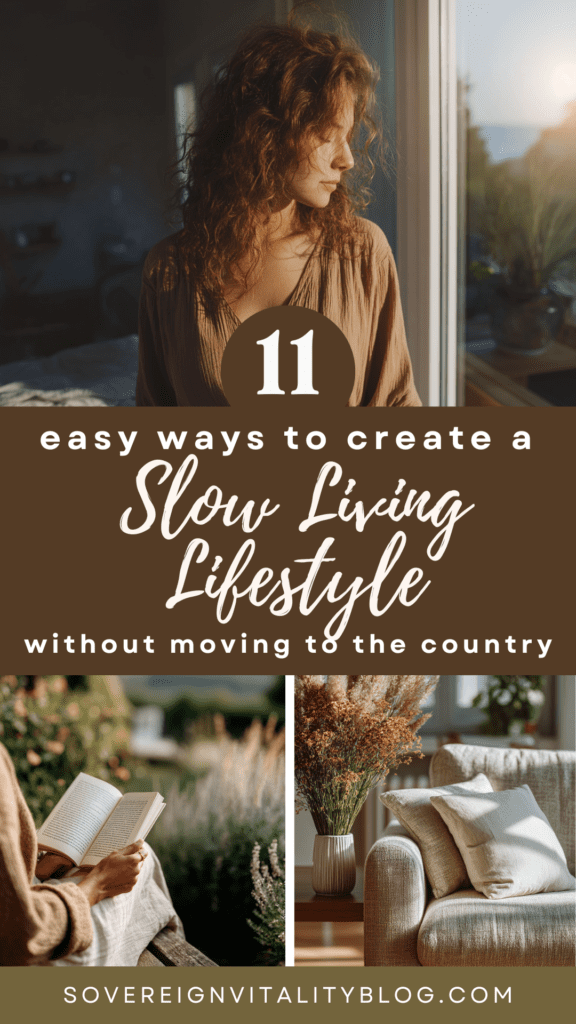
Redefine What Slow Living Actually Means
For a long time, I thought slow living meant removing myself from modern life entirely. I pictured wide open spaces, gardens, and long unstructured days. While those things can be beautiful, they are not the foundation of a slower life.
Slow living is about alignment. It is the practice of choosing what matters and allowing the rest to fall away. It is a shift in how you relate to time, not a requirement to change your location.
This shift matters because it makes slow living accessible. You can begin where you are, with the life you already have, and start shaping it into something that feels more spacious and intentional.
Related: How To Start a Slow Living Lifestyle This Year
Create Anchors in Your Day
One of the first changes I made was creating small anchors in my day. These are simple moments that hold a steady rhythm, no matter what else is happening around them. They act as a way to return to yourself.
For me, this looked like:
- Starting the morning without reaching for my phone
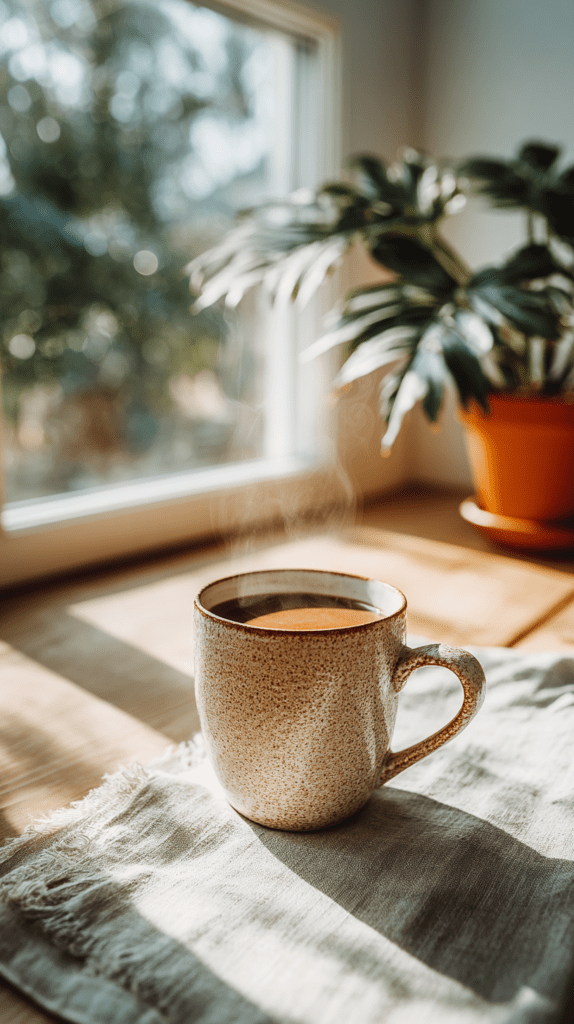
- Making tea or coffee and standing near natural light
- Letting the first part of the day unfold without urgency
In the evening, I created a wind-down rhythm that signaled it was time to step out of the pace of the day.
- Lowering the lights
- Turning off screens earlier
- Sitting with a book or simply resting
These anchors do not need to be elaborate. They just need to be consistent. Over time, they begin to shape how your entire day feels.
If this idea resonates, how to start slow living without leaving the city offers a practical next step for creating a calmer life right where you are.
Simplify Your Schedule Without Guilt
Many of us are carrying schedules that leave no room to breathe. Even when we are not actively doing something, we are thinking about what comes next. This constant forward motion keeps the body in a state of tension.
I had to learn how to simplify my schedule without feeling like I was falling behind. That meant being honest about what was actually necessary and what I had added out of habit or expectation.
A few shifts that helped me:
- Leaving space between tasks instead of stacking them back to back
- Saying no to commitments that did not feel aligned
- Protecting time for rest without needing to justify it
Letting go of unnecessary commitments creates space for presence. It allows you to move through your day with more awareness instead of rushing from one thing to the next.
Design Your Home to Feel Like a Sanctuary
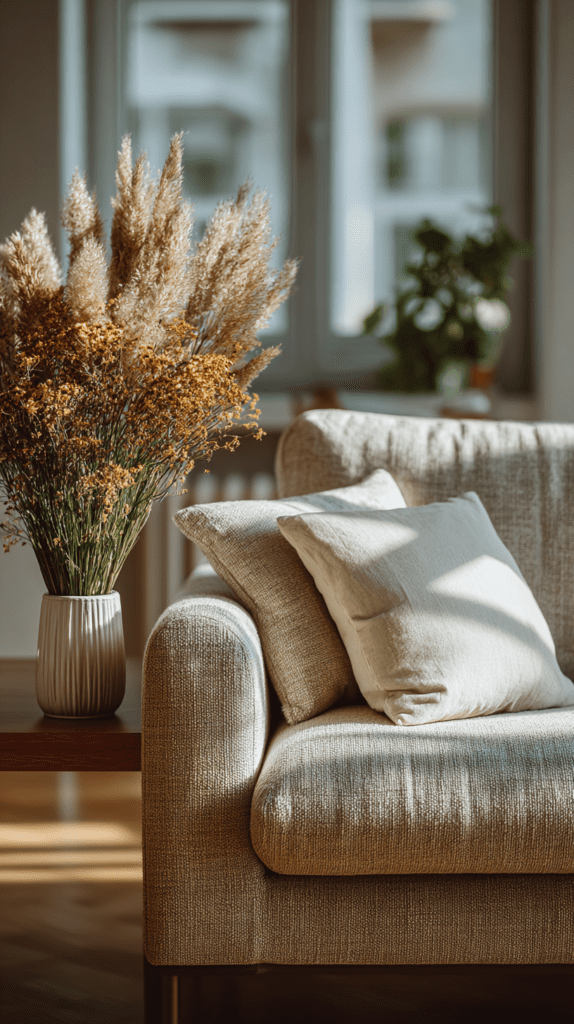
Your home has a powerful influence on how your life feels. Even in a small apartment, the environment you create can either support calm or contribute to overwhelm. I began to notice how visual clutter made it harder to settle into my space.
I started with small changes. Clearing surfaces, letting in more light, and choosing a few natural elements that made the space feel more grounded. A linen cloth, a wooden tray, a small plant near the window.
You do not need to transform your entire home at once. Creating even one corner that feels calm can become a place you return to throughout the day.
Related: How To Create A Nervous System Friendly Sanctuary at Home
Reduce Digital Noise
One of the biggest shifts came from reducing the amount of digital input I was allowing into my life. Notifications, constant scrolling, and background noise were keeping my nervous system activated in ways I had not fully realized.
I began turning off non-essential notifications and creating small windows of time where my phone was not within reach. At first, this felt uncomfortable. Over time, it became a relief.
You might start with:
- Turning off social media notifications
- Keeping your phone in another room for part of the day
- Replacing scrolling with a simple offline activity
When you reduce input, your internal pace naturally begins to slow. You create space to think, to notice, and to actually experience your day instead of moving through it in fragments.
Related: 7 Simple Dopamine Detox Activities for an Overstimulated Nervous System
Reconnect With Nature in Small Ways

There was a time when I believed I needed access to land to feel connected to nature. That belief kept me feeling disconnected, as if I was missing something essential. What shifted everything was realizing how many small ways nature is already available.
Stepping outside for a short walk, sitting in the sunlight for a few minutes, or growing herbs on a windowsill. These small interactions begin to reconnect you with natural rhythms.
Nature does not need to be expansive to be impactful. Even brief moments can shift your state and bring you back into a more grounded awareness.
Do One Thing at a Time
Multitasking had become a default for me. I would eat while scrolling, listen to something while working, and constantly split my attention. It created a sense of internal fragmentation that I did not fully recognize at the time.
Practicing single-tasking felt almost unfamiliar at first. Sitting down to eat without distraction, focusing on one task at a time, and allowing things to take their natural pace.
This practice creates a different experience of time. It allows you to be present with what you are doing instead of always reaching toward the next thing.
Shift From Convenience to Intentional Living
Modern life is built around convenience, but convenience often speeds everything up. I began to notice how many of my habits were designed to save time but were actually creating more disconnection.
Instead, I started choosing more intentional alternatives:
- Cooking simple meals at home
- Walking short distances when possible
- Repairing or reusing items instead of replacing them
These choices may take a bit more effort, but they also bring a sense of engagement back into daily life. There is a steady satisfaction that comes from doing things with intention.
Related: 7 Beginner Projects To Make Your Apartment More Self-Sufficient
Create Slow Pockets in a Busy Life
One of the most helpful shifts was letting go of the idea that everything needed to change at once. Instead, I started creating small pockets of slowness within my existing life.
This looked like:
- A slower morning once a week
- An evening without screens
- A simple weekly reset ritual
These small pockets began to expand naturally over time. You do not need a complete overhaul to feel a difference. Small, consistent shifts have a way of reshaping your entire experience.
Let Go of the Fantasy Version of a Slow Life
It is easy to compare your life to an idealized version of slow living. Images of countryside homes, large gardens, and endless time can create the sense that you are doing something wrong if your life does not look that way.
I had to release that comparison. A slower life is not defined by how it looks. It is defined by how it feels in your body and in your day to day experience.
Your version of slow living will be shaped by your environment, your responsibilities, and your values. That does not make it less meaningful. It makes it real.
What a Slower Life Actually Feels Like
As these habits began to take root, I noticed subtle changes. There was less urgency in how I moved through the day. More awareness of small moments that I used to miss. A greater sense of steadiness, even when life felt full.
A slower life does not remove responsibility or challenge. It changes how you meet them. It creates a foundation that feels more supportive and less reactive.
If you are feeling overwhelmed, you do not need to wait for a different life to begin. You can start where you are, with one small shift, and allow that to lead you forward.