
This post may contain affiliate links, including those from Amazon Associates. If you make a purchase through these links, I may earn a commission at no additional cost to you. Learn more about our affiliate policy.
When winter arrives, it can make even the most grounded person feel dependent on systems outside their control. The radiator turns on when it wants to, grocery prices rise, and the lack of sunlight can make the days feel shorter and the body sluggish.
I used to feel that same tension of longing for a sense of self-reliance while living in a small apartment surrounded by concrete and noise.
Over time, I realized that self-sufficiency isn’t about having acres of land or solar panels. It’s a mindset, a daily rhythm that reminds you that you already have the tools to create security, warmth, and nourishment wherever you are.
This season, you can bring that independence into your apartment life in simple, steady ways that support your body and nervous system through the darker months.
Food and Nourishment for Apartment Self-Sufficiency
Winter challenges how we eat. Fresh produce costs more, days feel shorter, and the temptation to rely on takeout grows stronger. But food is one of the easiest areas to reclaim sovereignty over.
With a little planning, you can create rhythms of nourishment that feel grounding and sustainable.
Start with what’s most practical:
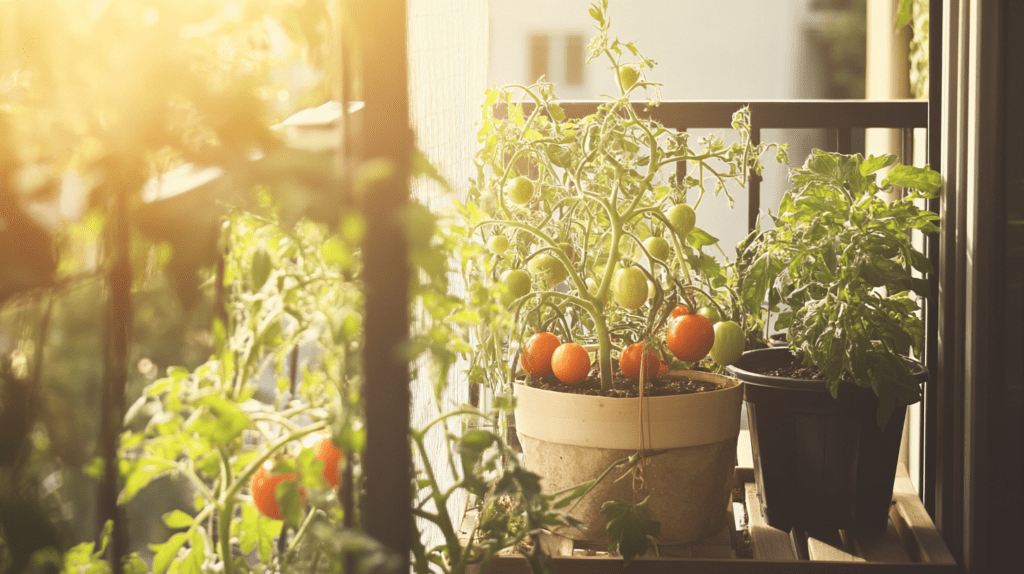
- Grow herbs or microgreens on your windowsill. Even in low light, herbs like parsley, mint, and chives do well indoors and bring freshness to meals. Explore these easy indoor herb garden ideas for fall and winter to grow nourishing greens all season long.
- Batch-cook once a week. Soups, stews, and roasted vegetables freeze well and save you from spending on quick, processed foods. Find cozy clean eating meal prep ideas here.
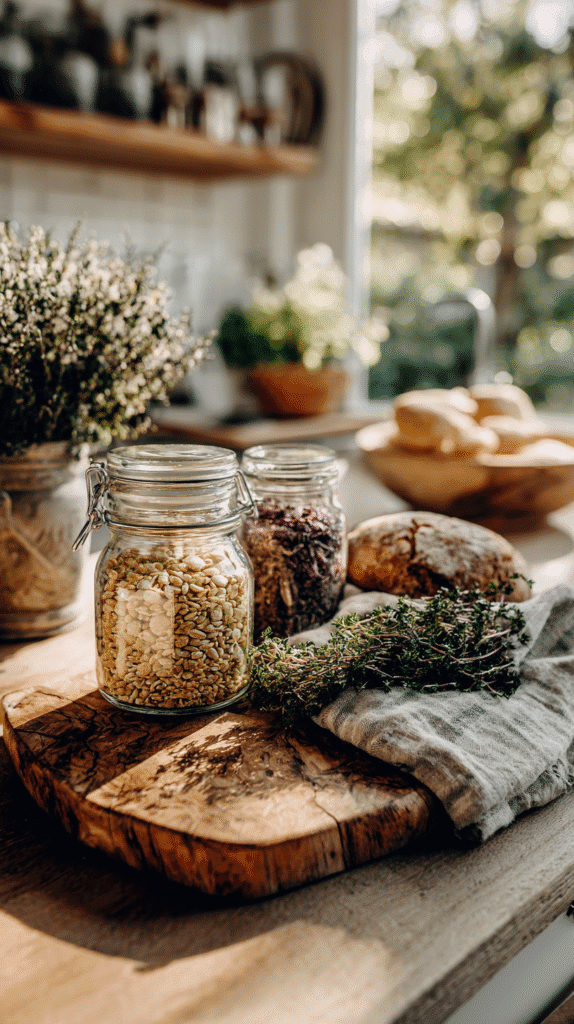
- Keep a small pantry of nourishing basics like beans, lentils, oats, rice, root vegetables, and good olive oil. These are affordable and form the foundation of countless meals.
- Try simple preserving techniques. Pickling or freezing small batches of produce keeps flavors alive long after the market shelves go bare. Here are the easiest ways to preserve food in an apartment.
Cooking this way becomes more than feeding yourself, it’s an act of reclaiming rhythm. It pulls you out of reaction mode and back into intention. When you know what’s in your kitchen, you feel more anchored and less swayed by scarcity or convenience culture.
Energy, Heating, and Resource-Wise Living
Apartment living often comes with the challenge of limited control over utilities. But small adjustments can make a real difference in both comfort and cost. Instead of surrendering to the chill or high bills, you can create an environment that supports you while staying mindful of energy use.
Try these low-cost, high-impact strategies:
- Roll up towels or use draft stoppers under doors and windows to keep warmth in.
- Use rugs to insulate floors and add texture to cold spaces.
- Let sunlight in during the day, then close curtains at night to keep the heat inside.
- Keep the thermostat slightly lower and layer with warm natural fabrics instead.
- Rearrange furniture so that no large items block your radiators or vents—let heat circulate freely.
If you can, switch to LED lighting to save on energy costs and mimic natural light. Simple acts like turning off unused electronics or unplugging devices overnight also make a difference.
The goal is to work with what you have and create comfort that doesn’t depend entirely on the system running your building.
As you begin to see the results, something shifts internally. You start feeling the difference between consumption and stewardship. This is the heart of self-sufficiency: knowing you have agency in how you use your energy, both physical and environmental.
Creating a Supportive Space
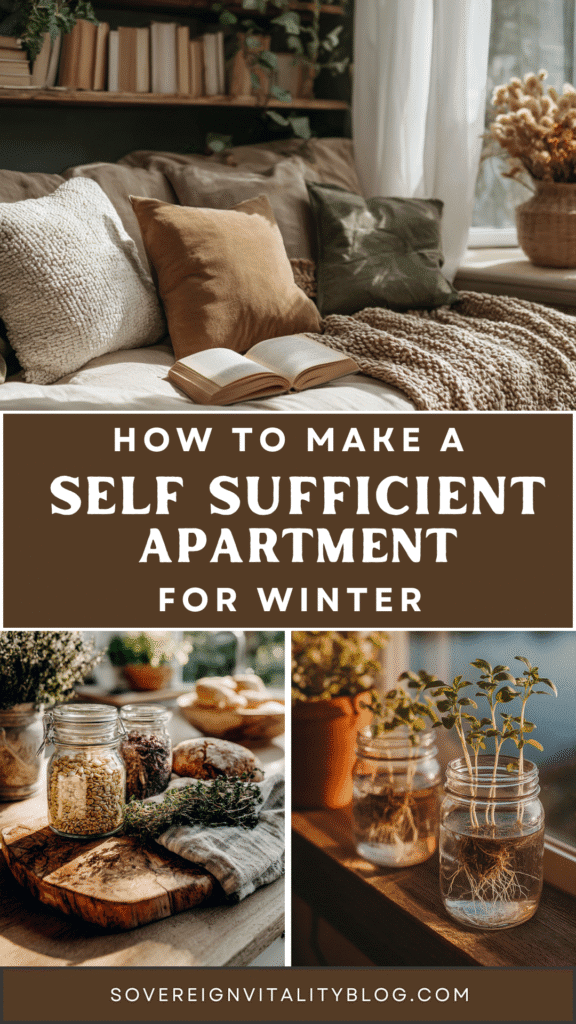
A self-sufficient home doesn’t have to be large. It has to work with you. Winter invites you to shape your apartment into a space that holds warmth and purpose.
Start by simplifying. Remove what you don’t use often. A clear space calms the senses and makes your daily rhythms flow more easily. Then focus on small upgrades that change how the space feels:
- Create a mini “stock corner” with dried legumes, jars of herbs, and preserved foods. This visual reminder of abundance helps quiet the mind when external supplies feel uncertain.
- Add light strategically. A mirror placed opposite a window reflects brightness into the room. Warm-toned lamps create a sense of coziness after sunset.
- Layer your space with organic textures like linen, wool, wood, and clay bring warmth and grounding.
- Bring in nature where you can. A few potted plants or small cuttings from evergreen branches can connect you back to the rhythms of growth and life.
You can even designate a small area for rest and reflection. A chair, a warm throw, and a cup of tea can become your ritual space to pause, breathe, and reset.
When your home feels like a sanctuary rather than a holding place, the winter months begin to nurture you instead of draining you.
You can also experiment with beginner projects to make your apartment more self-sufficient that use simple materials and small-space solutions to enhance daily independence.
Supporting Your Nervous System and Mindset

True self-sufficiency extends beyond food and home systems. It also includes your inner stability, how you regulate, respond, and relate to the season itself.
Winter often mirrors our own energy patterns: we turn inward, slow down, and crave security. But in modern life, that natural rhythm can clash with the constant push for productivity.
Living more self-sufficiently is about creating internal sovereignty; the ability to meet life as it is, with steadiness and grace.
Here are a few practices that build that inner foundation:
- Begin your mornings with light exposure, even for a few minutes. Natural or lamp light helps regulate circadian rhythms and mood. Use a red light device if you in a region that stays gray or dim.
- Move daily, even in small ways. Stretch, walk around your apartment, or follow a short online yoga flow. Movement signals safety to the nervous system.
- Keep a journal for gratitude and reflection. Writing a few lines about what you’ve created, repaired, or tended to that day builds confidence in your self-sufficiency.
- Set small achievable goals like learning one new recipe, repairing an item instead of replacing it, or sharing a meal with a neighbor.
These small acts of consistency create a rhythm that feels alive and grounded. They remind you that you’re capable of meeting your own needs with creativity and calm.
Community as a Form of Resilience
Self-sufficiency doesn’t mean isolation. In fact, interdependence, the ability to exchange resources, skills, or encouragement is part of true sovereignty. When we live in close quarters during the winter, community can become one of the most vital supports.
Start small. Share herbs or baked goods with a neighbor. Offer to water someone’s plants while they’re away. Trade books, recipes, or even small tools. These connections build mutual trust and subtly reduce the sense of isolation that winter can bring.
You might even form a small local group around shared values like urban gardening, home cooking, or clean living. It doesn’t have to be formal. A few aligned conversations can restore the feeling that you’re part of something sustainable and alive.
If you’re drawn to deepen that mindset, ways to be more self-sufficient while living in a city offers grounded practices for urban independence that complement a community-centered lifestyle.
Building a Self-Sufficient Winter Routine
To make these ideas real, start small. Choose one area to focus on each week. Maybe it’s food this week, energy next, or environment after that. Trying to overhaul everything at once will only create stress.
Here’s a simple rhythm to get started:
- Choose one focus for the week (for example: meal planning, light exposure, or reducing waste).
- Take two actions that support it—something you can do today and something you’ll repeat daily or weekly.
- Reflect each weekend on what changed. Did you feel calmer? More capable? Less wasteful?
- Gradually add new habits as each one feels integrated.
By spring, these actions will have built real skills and systems that last beyond the cold season. You’ll find that what started as a response to limitation becomes a foundation for greater freedom.
Closing Thoughts
Living self-sufficiently in an apartment is not about perfection. It’s about awareness—about reclaiming the ways you can support yourself through the seasons rather than relying on a system that doesn’t always care for your needs.
When you grow a few herbs, repair a drafty window, cook with intention, or tend your nervous system through slower rhythms, you’re sending yourself a message: I can create what I need. That’s the essence of sovereignty.
Winter gives us the perfect opportunity to practice it. It’s the season of turning inward, simplifying, and listening to what sustains us. By bringing those values into your apartment, you turn limitation into empowerment—and your space into a living reflection of stability, resilience, and warmth.